


Ayurvedic remedies for the Vata Dosha: grounding herbs and rituals

When life feels scattered, anxious, overstimulating, or simply too much, chances are your Vata dosha is out of balance. Vata—the dosha governed by air and ether—rules movement, the nervous system, breath, and thoughts. When it’s in balance, we feel creative, intuitive, and light.
When it’s not? We feel ungrounded, anxious, depleted, or frozen.
In a world moving at high speed, grounding practices are no longer optional—they’re essential. Ayurveda offers us centuries-tested tools to bring Vata back into rhythm, including the use of herbs, oils, breath, and fabric that nourish both the nervous system and the subtle body.
Why grounding matters for Vata
Vata is cold, dry, light, mobile, rough, and subtle by nature. To balance it, we bring in the opposite qualities through:
-
Warmth
-
Oiliness
-
Stillness
-
Softness
-
Repetition
-
Connection to the Earth
Grounding is not just physical—it's energetic and emotional. It’s the process of bringing the scattered pieces of ourselves back into our bodies.
Grounding Ayurvedic herbs for Vata
Certain herbs calm Vata by deeply rooting, warming, and nourishing the body and mind:
-
Ashwagandha: An adaptogenic powerhouse that stabilizes the nervous system and supports adrenal health
-
Bala: Strengthening and tonifying, often used in grounding oils
-
Brahmi (Gotu Kola): Grounds the mind and soothes mental overactivity
-
Holy Basil (Tulsi): Warms and calms with subtle spiritual uplift
-
Licorice Root: Moisturizing and soothing to dry tissues and digestion
These herbs can be taken internally (when guided by a practitioner), but they’re especially potent when used topically—through abhyanga (self-oil massage) and even through natural herbal-dyed textiles.
Grounding through the skin: Ayurvastra
Your skin is a sacred threshold between you and the world—it feels everything. That’s why what you wear, sit on, and practice on matters.
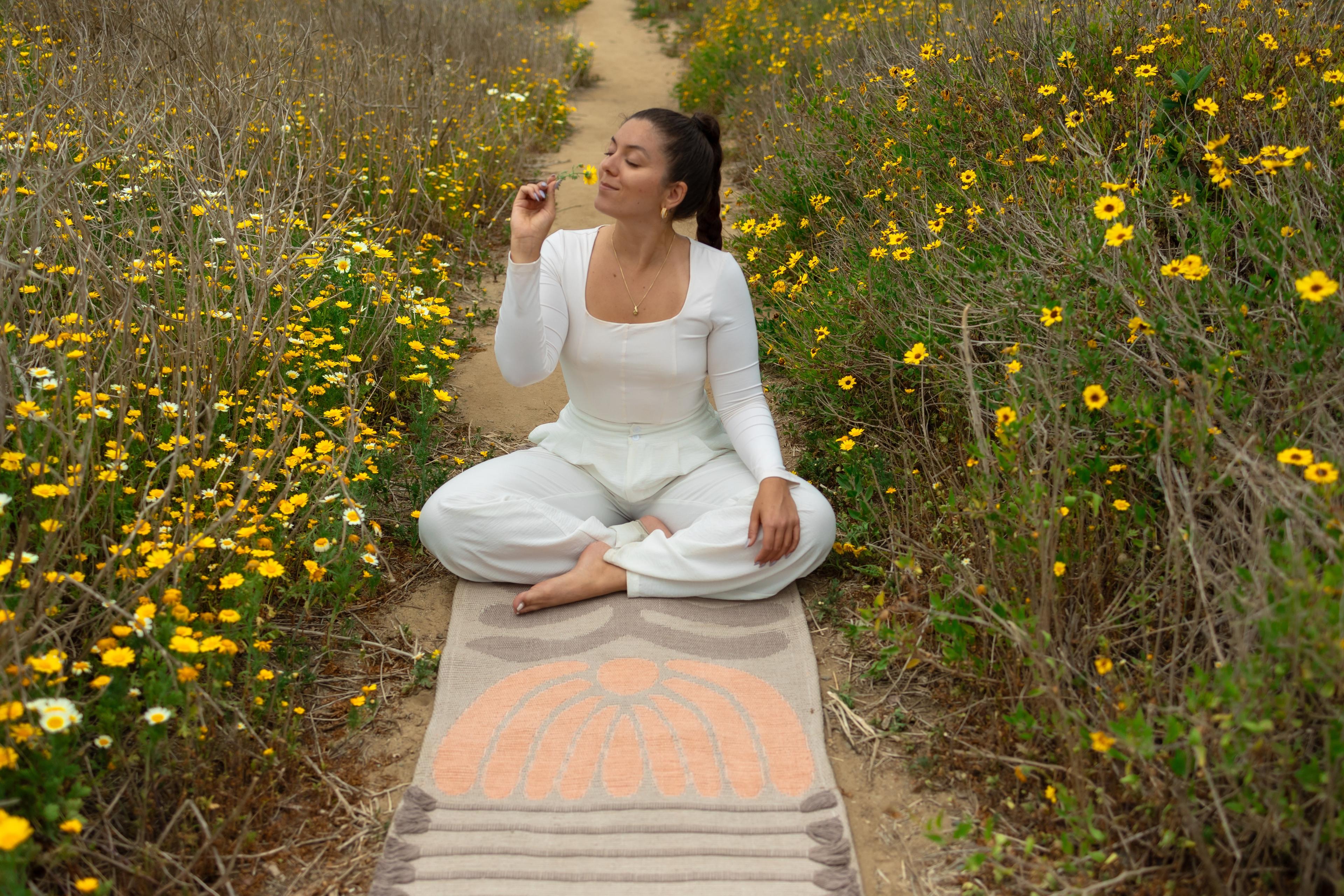
Öko Living’s Ayurvastra yoga rugs are handwoven from organic cotton and dyed with Ayurvedic herbs like Neem, Turmeric, and Holy Basil. When you practice on them, your body connects directly with plant intelligence—creating a physical and energetic layer of support. It’s not just about yoga—it’s about healing through contact.
The textures, herbal residues, and natural fibers all help dampen Vata’s overstimulation and anchor you in the moment.
Vata balancing ritual: Abhyanga
Daily self-oil massage is one of the most powerful anti-anxiety, anti-fracture practices in Ayurveda. Use a warm Vata-pacifying oil (like sesame or Mahanarayan oil) and massage your body with slow, loving strokes before your shower. Pay extra attention to the feet, joints, and lower back.
Benefits include:
-
Calmer nervous system
-
Improved circulation
-
Moisturized skin
-
Deeper sleep
-
Emotional regulation
This simple practice is Vata medicine in motion.
Vata balancing yoga poses
To balance the Vata dosha, favor postures that are low to the ground, repetitive and rhythmic, held longer (in order to to calm the Prana), or supported by props or weighted blankets.
Great poses include:
-
Child’s Pose (Balasana)
-
Supta Baddha Konasana (Reclining Bound Angle Pose)
-
Paschimottanasana (Seated Forward Fold)
-
Legs Up the Wall (Viparita Karani)
-
Cat-Cow with deep breath
-
Malasana (Yogi Squat) with grounding breath
Practice on an Öko Living rug for added earthy support and herbal infusion.
In a world of fast scrolls and chronic stimulation, slowness is power. Grounding is medicine. Ayurveda reminds us that true healing often begins with the simplest acts: warm oil, deep breath, herbal cloth, steady presence. If your Vata is out of balance, let this be your reminder: You don’t need to fix everything. You just need to come home to yourself.

About the Author
As a certified Ayurvedic Practitioner and Doctor, I help clients embrace Ayurveda in every aspect of their lives, including their environment. If you’re curious about Ayurvastra or want to deepen your Ayurvedic practices, I offer:
-
Personalized Ayurvedic Consultations: Identify imbalances in your doshas and receive tailored lifestyle, dietary, and environmental recommendations.
-
Ayurvedic Treatments: From soothing Abhyanga massages to transformative PanchaKarma programs, I offer hands-on therapies to restore balance.
-
Vedic Astrology Readings: Discover how your cosmic blueprint aligns with your wellness goals and how Ayurvedic practices like Ayurvastra can amplify your healing.
