


Understanding the Bandhas: The Ancient Practice of Moving From Within

There comes a point in many yoga journeys when the poses stop feeling like the destination.
The excitement of learning a new inversion or finally touching your toes begins to soften, replaced by a quieter curiosity. You start noticing your breath before your flexibility. You become more interested in how grounded you feel than how deep your pose looks. Yoga slowly transforms from something you do with your body into something you experience from within it. This is where the bandhas begin to reveal themselves.
Often translated as "energetic locks," the bandhas are one of yoga's most subtle teachings. They're almost invisible from the outside, yet they have the power to transform the way you move, breathe, and inhabit your body. Rather than asking us to work harder, they invite us to move with greater awareness. They remind us that true stability doesn't come from gripping or forcing—it comes from listening.
What are the bandhas in yoga?
The Sanskrit word bandha means "to bind," "to hold," or "to lock." But despite the translation, the bandhas aren't rigid muscular contractions. They are subtle internal actions that help organize the relationship between your breath, body, and what yogic philosophy calls prana, or life force.
Imagine a river flowing through a landscape. The water is already moving, but the shape of the riverbanks determines where it goes. The bandhas work in much the same way. They don't create energy—they simply help guide it.
While modern anatomy describes the body through muscles, fascia, and the nervous system, ancient yogis understood it through the language of energy. They believed prana flowed through thousands of subtle pathways called nadis, nourishing every aspect of our physical, emotional, and spiritual well-being. Whether you interpret the bandhas through the lens of anatomy or ancient philosophy, the invitation is the same: become more aware of what is happening beneath the surface.
The ancient meaning of the bandhas
The bandhas have been practiced for centuries within the tradition of Hatha Yoga, appearing in classical texts like the Hatha Yoga Pradipika, the Gheranda Samhita, and the Shiva Samhita. These ancient teachings describe the bandhas not as a way to perfect physical postures, but as practices that refine the breath, preserve vital energy, and prepare the mind for meditation.
In other words, they were never really about performance. They were about presence.
It's a refreshing reminder in a world that often encourages us to push harder, move faster, and constantly chase the next achievement. The bandhas invite us in the opposite direction—toward subtlety, stillness, and the understanding that sometimes the smallest internal shifts create the biggest transformations.
The three bandhas every yogi should know
Although the practice is subtle, traditional Hatha Yoga teaches three primary bandhas. Together, they create a sense of effortless support from the inside out.
Mula Bandha (Root Lock)
Located at the pelvic floor, Mula Bandha is often described as the foundation of the bandha practice. Rather than forcefully squeezing your muscles, imagine a gentle lifting sensation at the base of your pelvis while maintaining an easy, natural breath. This subtle engagement encourages grounding, stability, and a feeling of being supported from your center. In many ways, it reflects the roots of a tree: unseen, yet responsible for everything growing above.
Uddiyana Bandha (Upward Flying Lock)
The Sanskrit word uddiyana means "to fly upward," and this bandha embodies exactly that feeling. Traditionally practiced after a complete exhalation during advanced breathwork, Uddiyana Bandha creates a lifting sensation through the lower abdomen. In modern yoga classes, it's often introduced more gently as a soft engagement of the deep core that supports the spine and encourages spacious, intentional movement.
Rather than pulling your stomach in, think about creating lightness through the center of your body.
Jalandhara Bandha (Throat Lock)
Jalandhara Bandha is practiced at the throat, typically during seated pranayama and meditation. With the spine tall and the neck long, the chin gently lowers toward the chest, encouraging the attention to turn inward. It's a quiet gesture, but one that naturally supports slower breathing, concentration, and a sense of calm. Like the other bandhas, its power lies in its subtlety.
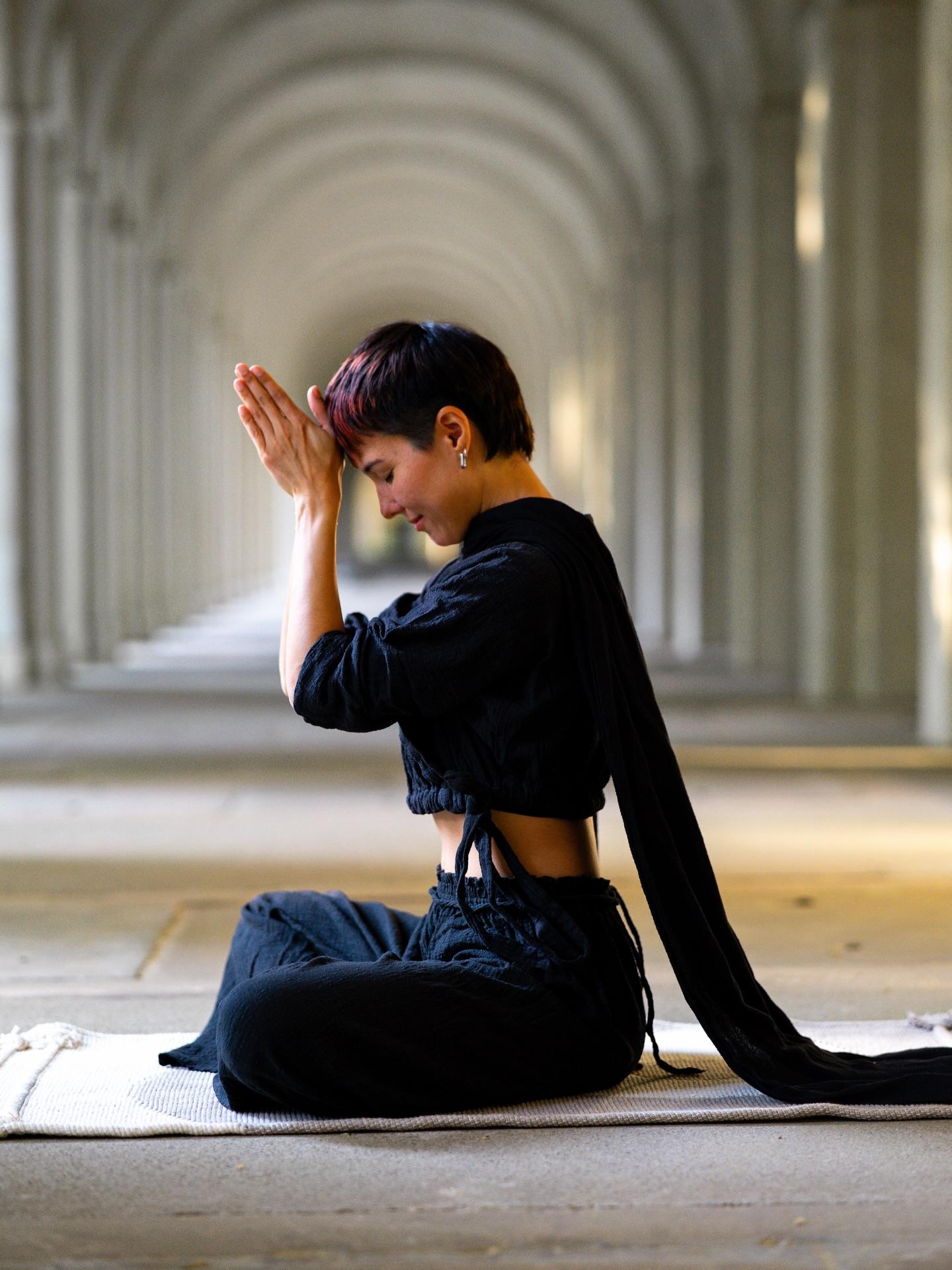
How the Bandhas Transform Your Yoga Practice
One of the beautiful things about the bandhas is that they rarely announce themselves. No one watching your yoga practice will know whether you're working with them or not. There are no dramatic movements or impressive shapes. Yet over time, you may notice your balance becoming steadier, your breathing becoming smoother, and your transitions feeling more fluid.
The practice gradually shifts from external alignment to internal awareness. You stop asking, "How does this pose look?" And instead begin asking, "How does this feel?" It's a small change in perspective, but one that often transforms the entire experience of yoga.
Bringing the Bandhas Into Everyday Life
The wisdom of the bandhas doesn't end when you roll up your mat. You might notice them in the way you naturally stand a little taller while waiting in line, the slow breath you take before a difficult conversation, or the quiet sense of stability that helps you move through a busy day with more ease. Like so much of yoga, their purpose isn't perfection. It's presence.
At Öko Living, we believe wellness is built through these small, intentional moments—choosing natural materials that move with your body, slowing down enough to notice your breath, and reconnecting with practices that have supported human well-being for centuries.
The bandhas are another invitation to do exactly that. The next time you step onto your mat, resist the urge to think about how your practice looks.
Instead, notice how it feels. Because some of yoga's most profound transformations happen in the places no one else can see.
