Tapas: The Yogic Practice of Discipline and Inner Fire

Discipline has become something of an obsession in modern wellness culture. We're encouraged to wake up earlier, push ourselves harder, stick to elaborate routines, and constantly work toward becoming better versions of ourselves. But in yoga philosophy, discipline has a much deeper meaning.
Tapas, the third of the five niyamas outlined in Patanjali's Yoga Sutras, is often translated as discipline, austerity, or inner heat. It's a practice rooted in intentional effort and the transformative power of committing ourselves to something meaningful.
And while Tapas certainly involves a willingness to embrace discomfort, it isn't necessarily about pushing harder or doing more. Sometimes, the most disciplined thing we can do is slow down, practice restraint, or simply return to what matters. The question isn't how much we can push ourselves. It's what our effort is actually in service of.
What Is Tapas in Yoga?
The Sanskrit word tapas (तपस्) comes from the root tap, meaning "to heat" or "to burn."
In traditional yogic philosophy, this heat represents the transformative power of sustained spiritual effort. Just as fire can transform what it touches, Tapas is understood as a practice through which we cultivate clarity, steadiness, and self-discipline.
In Yoga Sutra 2.1, Patanjali introduces Tapas as one of the three components of Kriya Yoga, or the yoga of action:
tapaḥ-svādhyāyeśvara-praṇidhānāni kriyā-yogaḥ
Discipline, self-study, and dedication to Ishvara constitute Kriya Yoga.
Later, in Yoga Sutra 2.43, Patanjali describes how Tapas contributes to purification and the development of the body and senses.
Historically, Tapas has encompassed a range of disciplined practices, including fasting, meditation, restraint, and other forms of asceticism. Within contemporary yoga, we might also explore its principles through consistent movement, mindful habits, and a willingness to remain present with discomfort.
The common thread is intentional effort in service of something meaningful.
Discipline Is Not the Same as Punishment
Our cultural understanding of discipline is often tied to productivity, self-improvement, and physical achievement. We celebrate the person who never misses a workout, wakes up before sunrise, or manages to squeeze an elaborate wellness routine into an already busy day. There's nothing inherently wrong with ambition or consistency, but when discipline becomes another way to measure our worth, even the healthiest habits can begin to feel exhausting.
Tapas invites us to examine the intention behind our effort. Are we practicing yoga because it helps us feel connected to our bodies, or because we believe our bodies need to change? Are we creating routines that genuinely support our well-being, or simply adding more obligations to our lives?
Traditional Tapas can be demanding, and it shouldn't be reduced to the idea that spiritual growth must always feel comfortable. At the same time, difficulty alone doesn't make something meaningful. Pushing through exhaustion, ignoring pain, or denying ourselves rest isn't necessarily an expression of greater discipline.
The purpose of Tapas isn't to prove how much we can endure. It's to cultivate the steadiness required to pursue what matters.
Sometimes that means challenging ourselves. Other times, it means practicing restraint, establishing boundaries, or recognizing when our efforts are no longer serving us.
Finding Your Inner Fire on the Yoga Mat
The yoga mat offers an opportunity to explore the relationship between effort, discomfort, and awareness. We might experience Tapas while holding a challenging pose, maintaining steady breathing through a demanding sequence, or returning to our practice on a day when motivation is nowhere to be found.
But the practice can also look quite different depending on what we need. For someone who tends to avoid discomfort, Tapas might mean staying in a challenging posture for another breath. For someone who habitually pushes beyond their limits, it might mean having the discipline to take Child's Pose or modify a movement instead of forcing a deeper expression.
This is where the distinction between discipline and self-punishment becomes especially important. Yoga isn't meant to be a competition with our bodies, and progress doesn't always mean doing something more advanced than we did yesterday. Sometimes, progress looks like greater awareness, more patience, or the ability to recognize what our bodies are asking for.
The next time you step onto your mat, try shifting your attention away from what you hope to accomplish and toward the quality of your effort. Notice where you're resisting a challenge and where you might be pushing unnecessarily. Let your breath become an anchor, and consider what it would feel like to approach your practice with devotion rather than expectation.
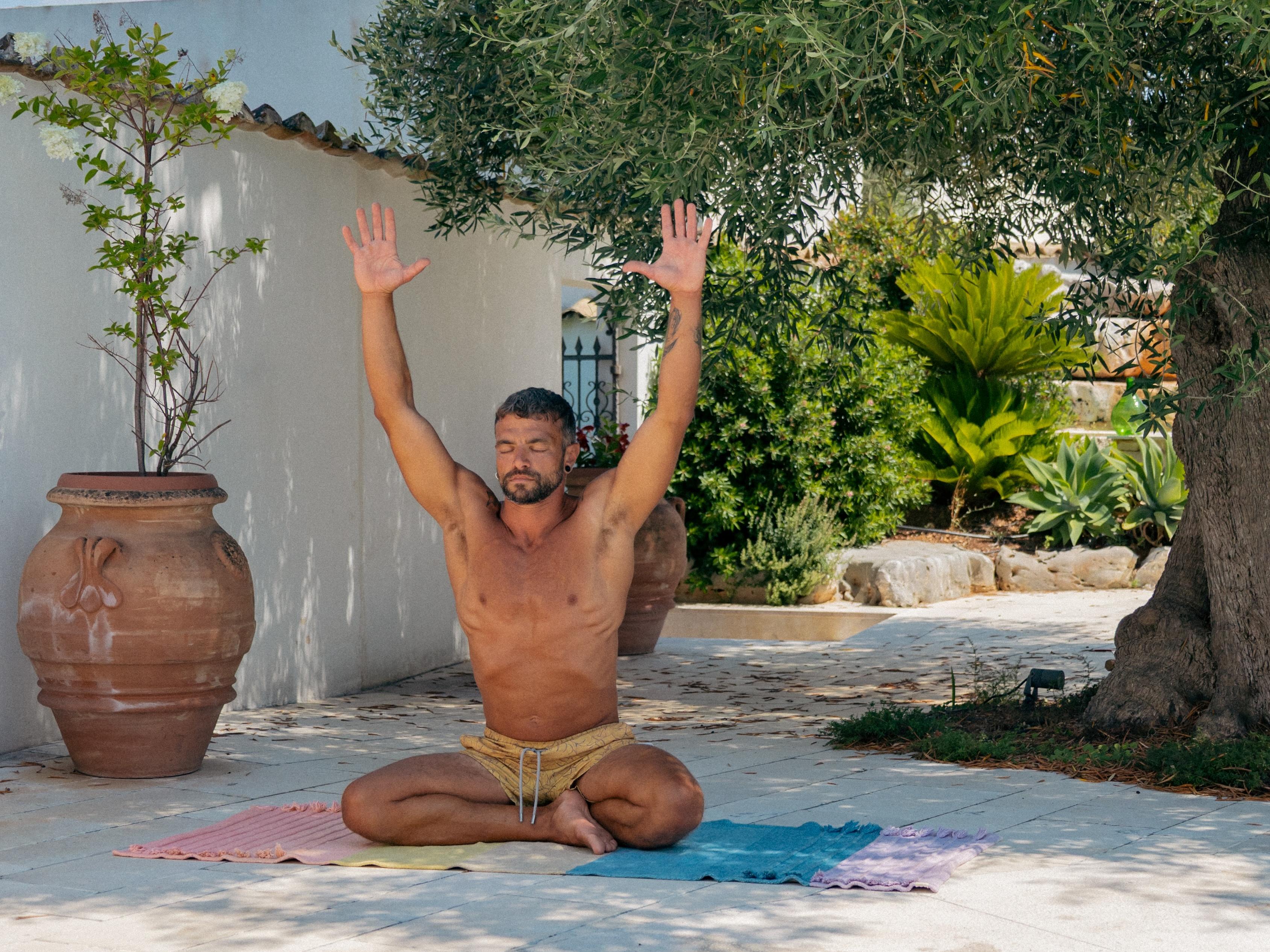
The Power of Everyday Rituals
While Tapas has deep roots in spiritual discipline, we can also draw inspiration from its teachings when considering the rituals and habits that shape our everyday lives. Not every meaningful practice needs to be elaborate or time-consuming. Often, it's the simple things we return to consistently that have the greatest influence on how we feel.
A few minutes of meditation before opening your phone, a morning yoga practice, an evening walk, or a moment of quiet reflection can become an opportunity to cultivate greater presence. The value of these rituals isn't necessarily found in how much we accomplish, but in the attention and intention we bring to them.
Over time, repetition can help transform an occasional activity into something more meaningful. Rolling out your yoga mat becomes less about completing a workout and more about creating space to reconnect with yourself. Meditation becomes less about achieving a perfectly quiet mind and more about developing the patience to sit with whatever arises.
Of course, consistency doesn't have to mean perfection. There will be days when our routines fall apart, when we're tired, or when life asks us to direct our attention elsewhere. Rather than treating those moments as failures, we can recognize that returning to a practice after an interruption requires its own kind of discipline.
Tapas and Intentional Living
We live in a world that constantly competes for our attention. Between notifications, social media, endless choices, and the pressure to keep up with what's new, it can be surprisingly difficult to remain connected to the things we actually value.
Tapas offers an opportunity to become more intentional about where we direct our energy. Instead of trying to do everything, we can begin to recognize which habits, commitments, and experiences deserve our sustained attention. Sometimes that means creating boundaries around our time, resisting unnecessary distractions, or choosing to engage more deeply with what we already have.
This perspective also extends to the way we consume. In a culture that frequently promises transformation through the next purchase, wellness trend, or self-improvement routine, Tapas encourages us to consider the value of consistency over novelty. Rather than constantly searching for something new to improve our lives, what might happen if we gave more care and attention to the practices and possessions we already value?
It's a natural continuation of the first two niyamas. Saucha, the practice of cleanliness and clarity, encourages us to recognize and clear away what creates unnecessary noise. Santosha, the practice of contentment, invites us to appreciate what is already here rather than constantly reaching for more. Tapas builds upon these ideas by asking us to commit our energy to what we've consciously chosen to cultivate.
Together, these practices offer an approach to intentional living that is less concerned with constant self-improvement and more interested in how we experience the lives we're already living.
How to Practice Tapas in Everyday Life
You don't need to completely overhaul your routine to begin exploring Tapas. In fact, choosing one small, meaningful practice and approaching it with consistency may be a more sustainable place to start.
Commit to a simple daily ritual. Choose something that genuinely supports your wellbeing, whether it's ten minutes of yoga, a few rounds of Sun Salutations, journaling, or a quiet moment with your morning tea. Rather than focusing on how much you can accomplish, consider how consistently you can create space for the practice.
Notice your relationship with discomfort. When something feels challenging, pause before immediately pushing through or pulling away. Is the discomfort an opportunity to develop patience and resilience, or is it a signal that something needs to change? Learning to recognize the difference is an important part of practicing with awareness.
Practice mindful restraint. Discipline isn't only about what we choose to do. It can also be reflected in what we choose not to do. Consider setting boundaries around screen time, resisting unnecessary purchases, or making more intentional choices about where you direct your attention.
Make room for rest. Rest isn't the opposite of discipline. Sometimes, protecting your energy, stepping away from an obligation, or allowing your body to recover requires more intention than simply continuing to push forward.
Return without judgment. Missing a day or falling out of a routine doesn't erase the value of your efforts. Instead of approaching consistency as an all-or-nothing commitment, consider the simple act of beginning again as part of the practice itself.
Tending Your Inner Fire
There is a difference between living with discipline and living under the constant pressure to improve. One is rooted in intention and commitment; the other can leave us feeling as though we're never quite doing enough.
Tapas reminds us that meaningful transformation often requires effort, patience, and a willingness to remain committed through discomfort. But that effort doesn't need to be driven by dissatisfaction with who we are or where we find ourselves.
We can appreciate our lives as they are while continuing to cultivate the things that matter to us. We can challenge ourselves without turning every practice into a measure of success. And we can recognize that sometimes the most meaningful progress happens quietly, through the small choices we make again and again.
The inner fire of Tapas doesn't have to burn fiercely to be transformative. It simply needs tending.
Unleash Your Potential with a Yoga Rug
Build more strength, alignment, and wellness with the world's highest-quality yoga rug. Certified organic cotton and herbal-dyed.